Track Events
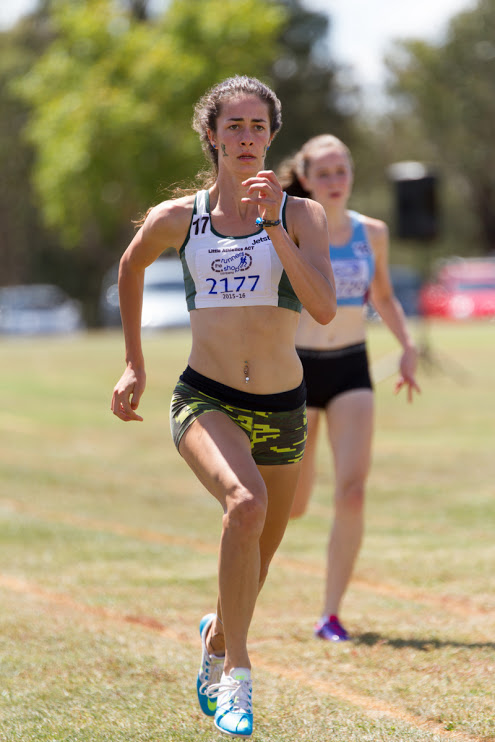
Track events take precedence over field events: eg if an age group is at long jump when their race is called, they must leave long jump and marshal for their race. At the end of the race, athletes are then to return to their long jump event.Track events encompass all running events plus hurdles and race walk. For track events, the Age Group Manager will sort the athletes into lanes for the start of each race. Where numbers in an age group are small, boys and girls may compete in the same track event or age groups may be combined (provided the events specifications are the same).
A starting device with a speaker is used to commence the race. A false start is signalled by two beeps in quick succession. At LAACT competitions, an athlete is only allowed one false start; however, at QLAC athletes will be allowed more than one false start at the discretion of the Starter.
Little Athletics Australia has a series of fact sheets for events that provide specific information for each event type.
In recognition that younger athletes who qualify for NSW school-based athletics championships must use blocks, younger athletes at QLAC may use starting blocks if they also attend QLAC-arranged training sessions to obtain their block licence.
While timekeeping may seem a scary task, it’s not, and it provides a great opportunity to be up close to the athletes, encouraging them to achieve their personal best. Training on the use of the timing gates and laptop can be provided each competition day.
For laned events, timing commences automatically when the Starter begins the race the with the starting device. The lane times will be recorded automatically when the athelete crosses the finish line. After each athlete crosses the finish line they need to pick up the numbered cone in their lane and take it to the Chief Time Keeper. After all athletes have completed the race, they take their lane numbered cone to the time keeper in the tent to have their registration number recorded against their lane. Remind athletes to return their numbered cone to the correct lane.
Race Walk
| Age | Distance |
| U9 | 700m Walk |
| U10 – U11 | 1100m Walk |
| U12 – U17 | 1500m Walk |
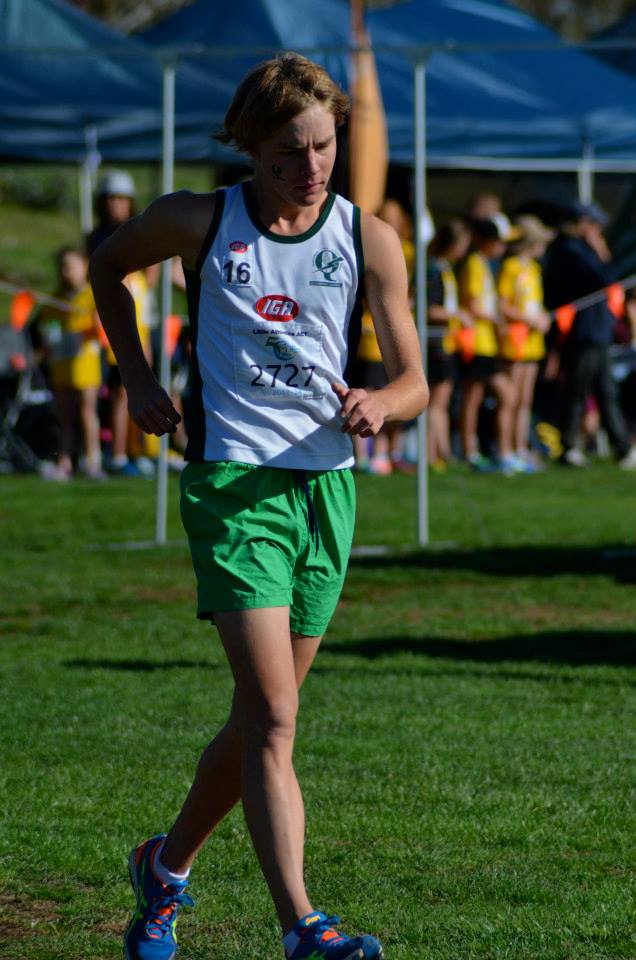 Race walking is a progression of steps so taken that unbroken contact with the ground is maintained at all times, as judged by the human eye. There are two main rules: the Contact rule states that during the period of each step, the advancing foot of the walker (heel first) must make contact with the ground before the rear foot leaves the ground; and the Knee rule which states that the advancing leg shall be straightened (ie not bent at the knee) from the moment of first contact with the ground until it is in the vertical upright position (ie directly underneath the body). At QLAC we are fortunate to have official judges attending some competition days when the walks are on. These judged may caution competitors when they are in danger of failing to comply with the rules. Each judge may deliver a warning. At LAACT competitions, if three warnings are presented by the judges the athlete will be disqualified. At QLAC the judges are there to show the correct style and will slow the athlete down and let them continue rather than disqualifying them from the competition.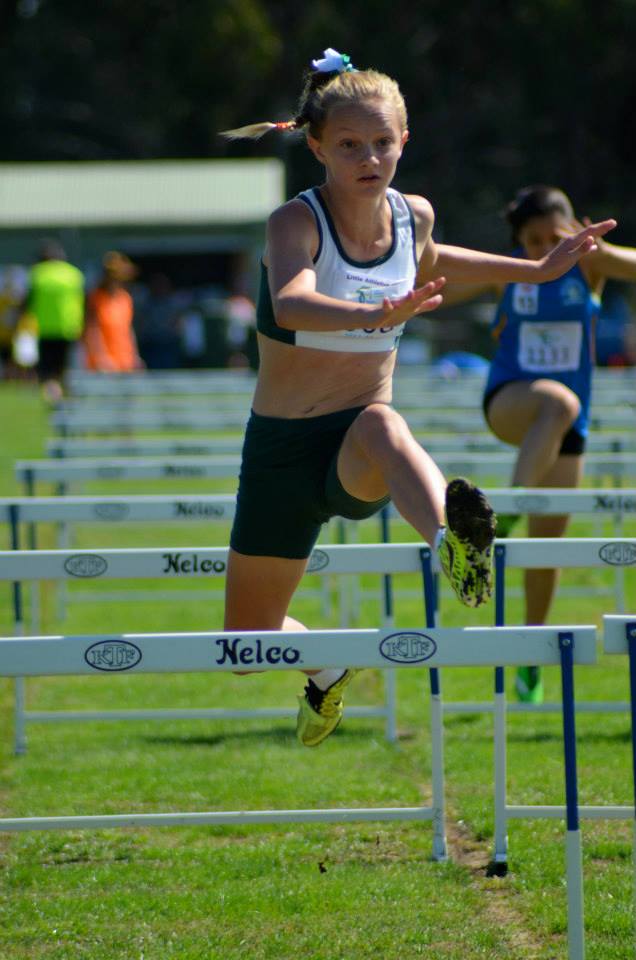
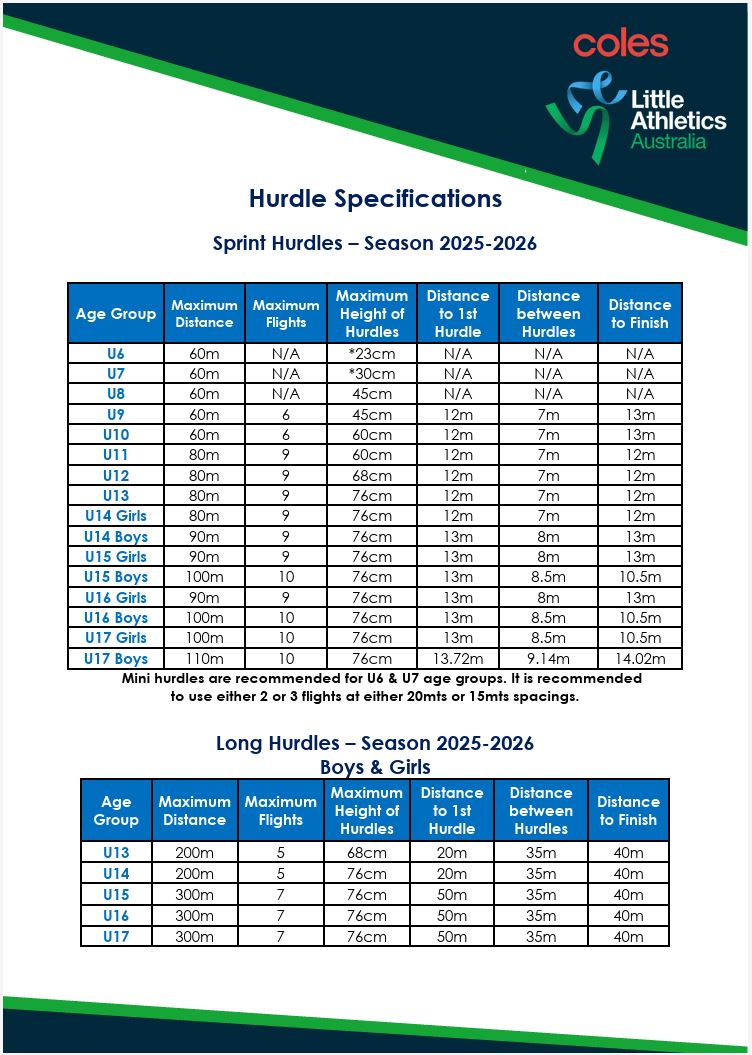
Hurdles
The distance run and the number and height of the hurdles differs for each age group as follows. Our U6 and U7 athletes will compete on the straight of the round track, over mini hurdles.
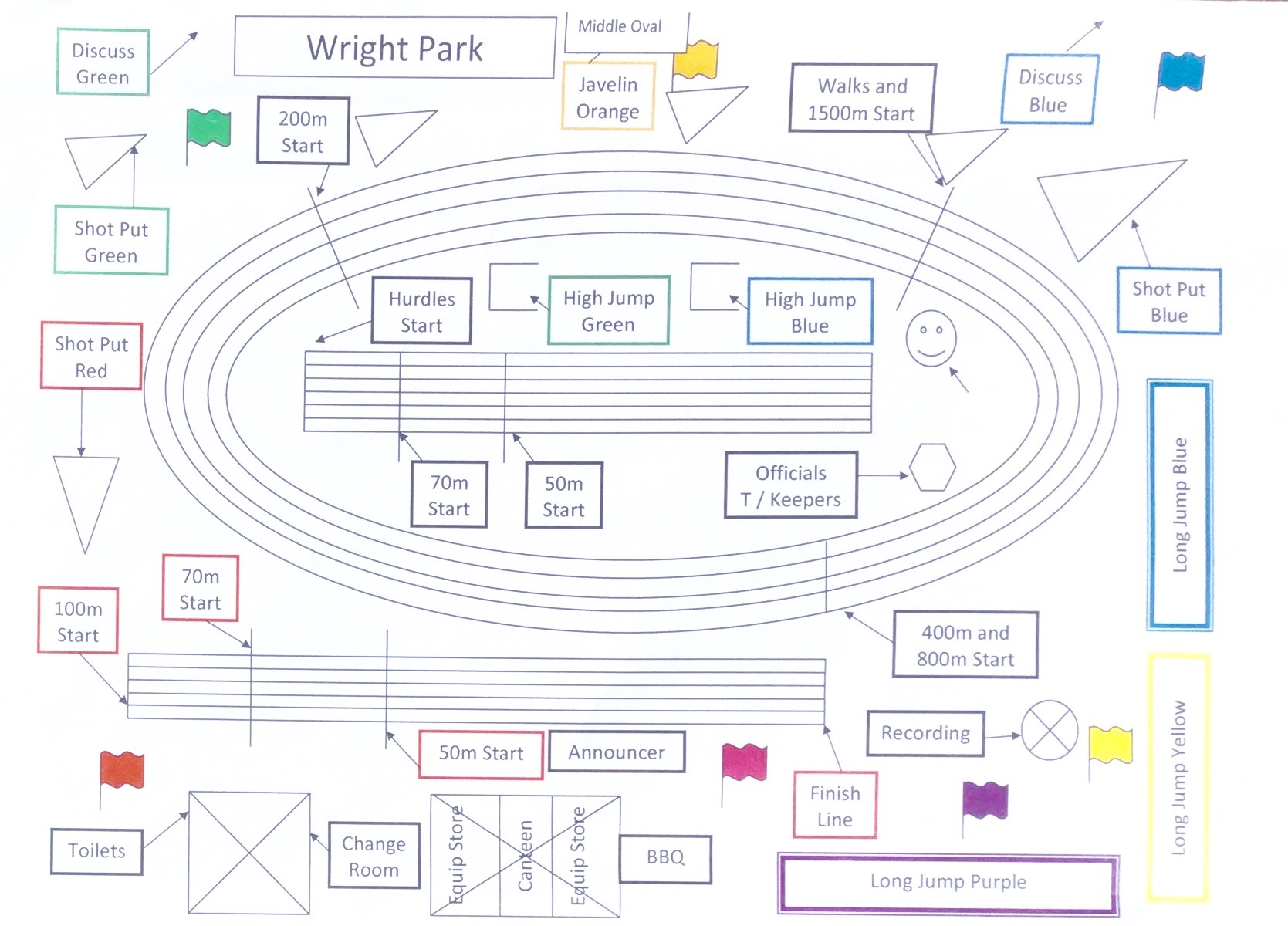
Event Layout at Wright Park